

If you are a university student in Pakistan right now, you have probably heard the same two things over and over. One, AI is going to change everything. Two, AI is going to take your job.
Both are half true. And both are useless if nobody tells you what to actually do about it.
So let us skip the fear and get practical. This blog is a simple guide to the AI skills worth learning, the order to learn them in, what they can pay, and how to turn them into a real job or freelance income. No jargon. No hype. Just a clear path you can start this month.
Why This Is the Right Moment
Here is the situation in simple terms. The demand for AI skills in Pakistan is growing much faster than the supply of people who have them.
Universities are still catching up with what the industry needs, and reports keep pointing to a serious shortage of AI skilled professionals in Pakistan. That sounds like a problem, and it is. But if you are a student, it is also very good news. It means less competition and more room for anyone who actually puts in the work.
There is a catch, though. Employers are no longer impressed by a degree on its own. They want proof that you can do the work. Projects, internships, a GitHub profile, something real they can look at. A student with a strong portfolio will beat a student with a strong CGPA and nothing to show.
That is the whole game. Learn the skills, then prove them.
The AI Skills Actually Worth Learning
You do not need to learn everything. You need to learn the right things in the right order. Here is what matters most.
- Python. This is not optional. Almost every AI tool and library runs on Python. Start here, even if you have never written a line of code.
- Data skills. SQL, Excel, and libraries like Pandas and NumPy. AI runs on data, so knowing how to clean it, read it, and understand it is the base of everything else.
Basic maths. Statistics, probability, and a bit of linear algebra. You do not need to be a genius at maths. You just need enough to understand why a model behaves the way it does. - Machine learning. How to train a model, test it, and improve it. Tools like Scikit learn come in here.
- Deep learning, NLP, and computer vision. This is where things get interesting. Working with text, images, and neural networks using TensorFlow or PyTorch.
- Working with LLMs and AI agents. Large language models are the biggest shift in tech right now. Learning how to build with them, fine-tune them, and connect them to real tasks is one of the most valuable skills you can have in 2026.
- Deployment basics. Knowing how to actually put a model online using something like Docker or FastAPI. This is the skill most students skip, and it is often what gets you hired.
If AI agents are new to you, our guide on what AI agents are and why Pakistan’s tech workforce should pay attention is a good place to start.
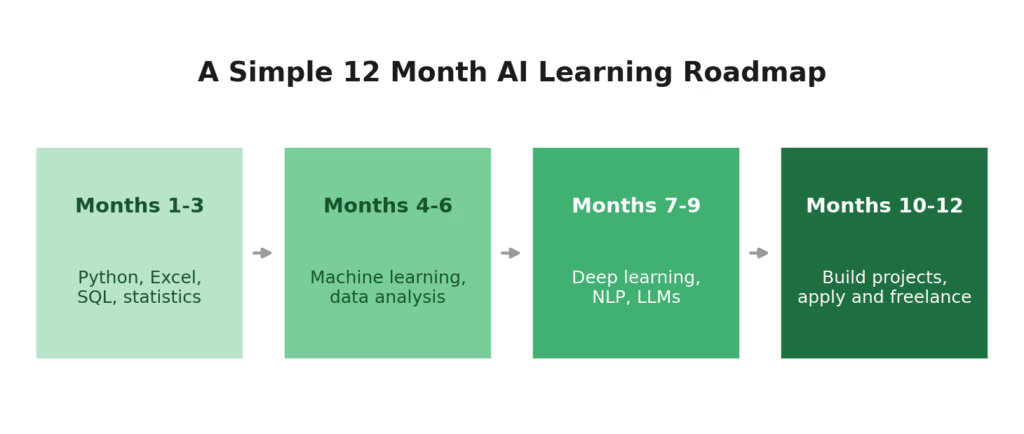
Do not try to rush all of this in two months. Twelve months of steady effort will take you much further than three weeks of panic learning.
What These Skills Can Actually Pay
Let us talk about money, because that is a fair question and most blogs avoid it.
AI roles are among the better-paying entry-level jobs available to fresh graduates in Pakistan today. Reports on high-paying tech jobs regularly list AI engineers and data scientists among the top earners, with mid- to senior roles often crossing PKR 200,000 per month.
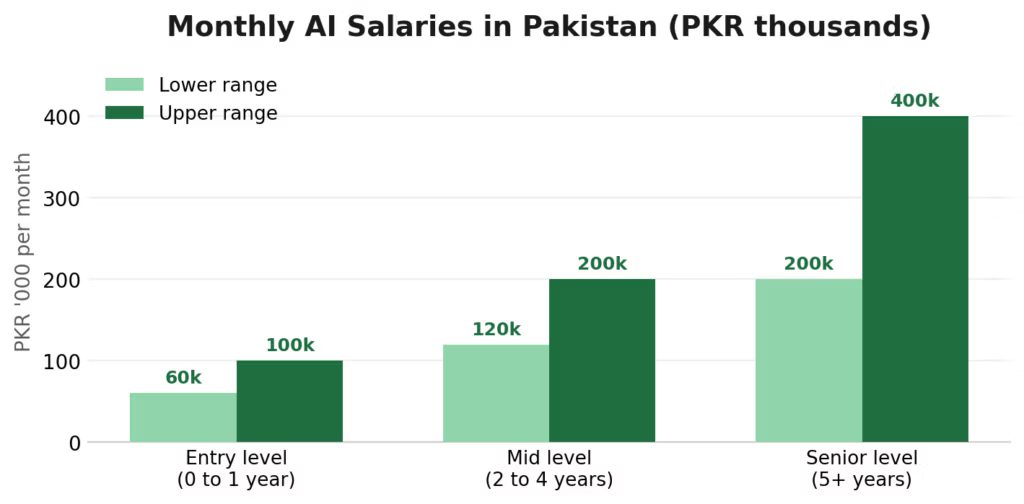
Two things worth noting. First, these are ranges, not promises. Your skills and your portfolio decide where you land inside them. Second, freelancing can pay more than a local job, especially if you work with clients abroad. Many Pakistani AI freelancers earn well through chatbot development, LLM fine tuning, and data work for international clients.
The bigger point is this. You can now sit in Lahore, Karachi, Multan, or Peshawar and work for a company anywhere in the world. Remote work has made your location much less important than your skills.
Where the Jobs Actually Are
Not every industry in Pakistan is hiring AI talent at the same speed. If you want to be practical about it, aim where the demand already exists.
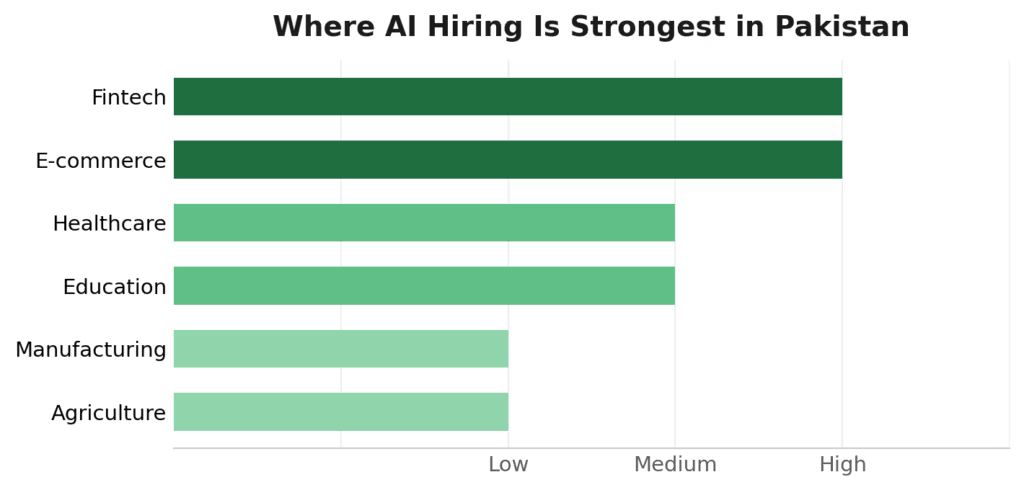
Fintech and e-commerce are the strongest right now. Banks and payment apps use AI for fraud detection and credit scoring. Online stores use it for recommendations and demand forecasting. Healthcare is growing fast too, especially in telemedicine and medical imaging. Education and agriculture are earlier but rising.
There is also a large and growing enterprise side to this. Big organisations need people who can bring AI into their daily operations, not just build clever demos. That work is steady, well paid, and often less crowded than the flashy startup roles.
How to Prove You Can Do the Work
This is the part that separates students who get hired from students who keep applying.
Build three to five projects and put them online. Not tutorial copies. Real things you thought about and finished.
- Build something in Urdu. A sentiment tool for Urdu tweets, or a simple Urdu chatbot. Very few people are doing this, and it stands out immediately.
- Solve a local problem. Something for a small shop, a clinic, a university department, or a farm. Local relevance is a real advantage.
- Finish it properly. Host it, write a short README, record a one-minute demo. A working link beats a folder of code every time.
Then put all of it on GitHub and LinkedIn. Many young AI professionals in Pakistan say the same thing: it was the portfolio that got them hired, not the grades.
Apply for internships early, even unpaid ones at good companies, and start freelancing with one small job to build reviews. Confidence comes from doing, not from waiting until you feel ready.
You Can Also Build Your Own Thing
Getting hired is one path. Building something of your own is another, and it is more realistic than it used to be.
Pakistani founders are already doing this. Companies like TaxGPT, Metric, and Farmdar are building AI products and selling them internationally. We covered the topics in our previous blog, How Pakistani Startups Are Using AI to Compete Globally.
The lesson from them is simple. The best AI businesses are not thin wrappers on top of ChatGPT. They solve a specific painful problem for a specific group of people. As a student, you already understand problems that big global companies do not even see. That is your starting advantage.
It also helps to understand the bigger picture of who owns and controls AI systems. If that interests you, read What Is Sovereign AI? And Why Should Pakistan Care?
The Honest Part
A few things nobody tells students, so let us be straight.
Learning AI takes real effort. There will be weeks where nothing works, and you feel behind. That is normal, and it happens to everyone.
Access to computing power can be expensive. Free options like Google Colab will carry you a long way at the start, so use them before spending money.
And be careful about courses that promise a job in thirty days. Real skills take months, not weeks. Anyone telling you otherwise is selling something.
None of this should discourage you. It just means the people who stay consistent get rewarded, because most people do not.
How atomcamp Can Help You Start
This is exactly why atomcamp exists. We have trained over 6,000 young people and professionals, and we work with the Ministry of IT, HEC, Meta, Microsoft, and Huawei, along with universities across Pakistan. Our programs focus on hands-on projects and mentorship, because that is what actually gets people hired.
Here is where to begin, depending on where you are today:
- Already comfortable with coding? The AI Bootcamp covers machine learning, deep learning, NLP, computer vision, and generative AI, with real products you can deploy and show employers.
- Coming from a non-technical background? The Data Analytics Bootcamp starts with Excel, Power BI, SQL, and Python. It is the friendliest way into this field, and it works well for students from business, social science, and other degrees.
- Still deciding? Browse all atomcamp courses and pick the track that fits your goals and your schedule.
Our graduates now work at companies like Careem, Traversaal.ai, PTCL, SECP, etc. Skills built in Pakistan travel very well.
Start Small, But Start Now
You do not need to be brilliant at maths. You do not need to come from a top university. You do not need permission from anyone.
You need a laptop, an internet connection, and the patience to keep going for a few months. That is genuinely it.
The students learning these skills today are the ones who will build Pakistan’s AI companies, work with global teams, and train the next batch after them. There is no reason that cannot be you.
Ready to begin? Explore atomcamp’s bootcamps and courses and take the first step today.
Frequently Asked Questions
Which AI skills should Pakistani students learn first?
Start with Python, then move to data skills like SQL, Pandas, and basic statistics. After that, learn machine learning, then deep learning, NLP, and how to build with large language models. Add basic deployment skills at the end, because most students skip that part and it makes you stand out.
Do I need a degree in AI to get an AI job in Pakistan?
No. A degree helps, but employers care most about proof that you can do the work. Many people enter the field from mathematics, computer science, business, or completely non-technical backgrounds by learning online, joining a bootcamp, and building a strong project portfolio.
How long does it take to become job-ready in AI?
About six to twelve months of consistent effort is realistic for most students. A structured bootcamp can shorten that, but only if you also build and publish your own projects along the way.
What can AI skills pay in Pakistan?
Entry-level AI roles commonly start around PKR 60,000 to 100,000 per month, and mid to senior roles often cross PKR 200,000. Freelancing with international clients can pay more. These are estimates and depend heavily on your skills, city, and portfolio.
Can I learn AI while doing a non-technical degree?
Yes, and many students do. Begin with data analytics, which needs less coding at the start, then move into AI once you are comfortable. Your subject knowledge in fields like business, health, or agriculture becomes an advantage when you apply AI to those areas.
Which industries in Pakistan hire the most AI talent?
Fintech and e-commerce lead, followed by healthcare and education. Enterprise roles inside larger organisations are also growing, since many companies now want AI built into their everyday operations.