
atomcamp

Data Engineering

A robot sorting something in a factory setting.

How to Scale AI in Your Organisation: A Guide For Leaders

You know how AI used to be something only tech companies talked about? Well, those days are over. Now, everyone from manufacturers to healthcare providers is jumping on the AI bandwagon. Every company including yours need to scale AI. But the question remains, how do you incorporate AI in your organisation? This is what we will explore in this article. It’s no longer just about cutting costs or increasing profits for tech-savvy companies—it’s everywhere. Back in June 2020, Gartner said that 75% of companies would go from just testing out AI to actually using it in their day-to-day operations. That prediction is coming true, but here’s the kicker: scaling AI isn’t easy. To get the most out of AI, businesses need to implement it on a big scale. This isn’t just throwing a few AI models like GPT, LLaMa 3.5, Gemini, or even GROK into play. You’ve got to weave it into the entire fabric of the business—products, services, and how everything runs. When companies manage to do that, they can cut costs by automating boring tasks, improve how decisions are made, and find new ways to make money. But here’s the catch: getting AI to that point is tough. Rolling out one or two AI models is a whole different ball game than using AI across the entire business. As companies push AI further, things start getting complicated. The more you rely on AI, the bigger the challenges become. So, how can you actually integrate or scale AI in your organisation? Let’s dive into what that looks like, and how to do it. What Does “Scaling AI in Your Organisation” Even Mean? When we talk about scaling AI, it’s not just about testing a few models here and there. We’re talking about integrating AI deeply across the whole business. That means using it not just for one-off tasks but embedding it into daily operations, decision-making, and even how you interact with customers. To really scale AI, it needs to be: The Big Four: Data, Technology, Processes, and People To scale AI, you need a plan that covers everything: data, tech, processes, and people. It’s all connected, so if one piece is off, the whole thing could fall apart. 1. Data AI runs on data, so you need good data—lots of it, and fast. Make sure your data is clean, organized, and accessible across the company. For that, you will need people who are good with Data Analytics. If you don’t have some resources already, I would recommend Upskilling a few on Data Analytics skills. 2. Technology You need strong tech behind your AI efforts, like cloud platforms, machine learning tools, LLMs (Large Language Models), and security systems. Plus, it needs to grow as your AI initiatives expand. 3. Processes Your business processes need to adapt. Think automation for repetitive tasks and AI-powered decision-making baked into your workflows. 4. People It’s not all about the tech. You need people who know how to use AI—data scientists, engineers, and AI specialists. Plus, everyone needs to get on board with AI, which means training and upskilling are key. Strong Data Infrastructure = AI Success If you want AI to scale, you need a solid foundation. That starts with your data infrastructure. It’s not just about collecting and managing data—it’s about building systems that can handle huge amounts of data without breaking a sweat. You also need a smooth data pipeline. That’s the system that moves data from where it’s collected to where it’s analyzed. You want it to run automatically, with as little human involvement as possible, to keep things efficient. Making a Plan to Scale AI in Your Organisation Scaling AI isn’t something you just do on a whim. You need a strategy that aligns with your business goals. Start by asking yourself, “What do we actually want AI to do for us?” Make sure the projects you choose are directly connected to your company’s big-picture plans. From there: Focus on projects that are likely to succeed. Start small, score some wins, and use that momentum to tackle bigger AI challenges. AI Isn’t a Solo Project: Get Everyone Involved Scaling AI means getting multiple departments to work together. The more people you have from different parts of the business, the better your AI solutions will be. Collaboration means AI solutions that are better aligned with actual business needs and more likely to succeed. MLOps: Keeping Your AI Running Smoothly Once you’ve got AI models running, you need to keep them running smoothly. That’s where MLOps (machine learning operations) comes in. It helps streamline deployment, so your AI models can be updated and tweaked as needed without tons of manual work. Plus, MLOps helps monitor how well AI models are performing. It spots when things start to drift (like when the model’s predictions get less accurate), so you can fix it before it affects business. Training Your Team: The Key to Scaling AI To make AI work, your team needs the skills to manage and use it. Upskilling and reskilling are crucial. Everyone from data scientists to non-technical employees needs to be comfortable working with AI tools. This not only impacts productivity but also helps create a culture that inclusive for innovation. Overcoming Challenges in Scaling AI Let’s be real: scaling AI comes with its fair share of challenges, especially around data quality and security. The more data you use, the bigger the risks. You need strong data management strategies to keep everything running smoothly. There’s also the challenge of getting people on board. A lot of employees worry about AI taking their jobs. To ease these fears, businesses need to make AI adoption a team effort, with plenty of training and clear communication. AI in Your Organisation: Wrapping It Up Scaling AI is no easy feat, but if done right, it can transform your business. It’s about more than just having the latest tech—it’s about aligning AI with your company’s goals, building the right infrastructure, and getting your people on

How to Scale AI in Your Organisation: A Guide For Leaders Read More »
how-to-learn-mlops-in-2024

How To Learn MLOps in 2024? A Step-by-Step Career Guide

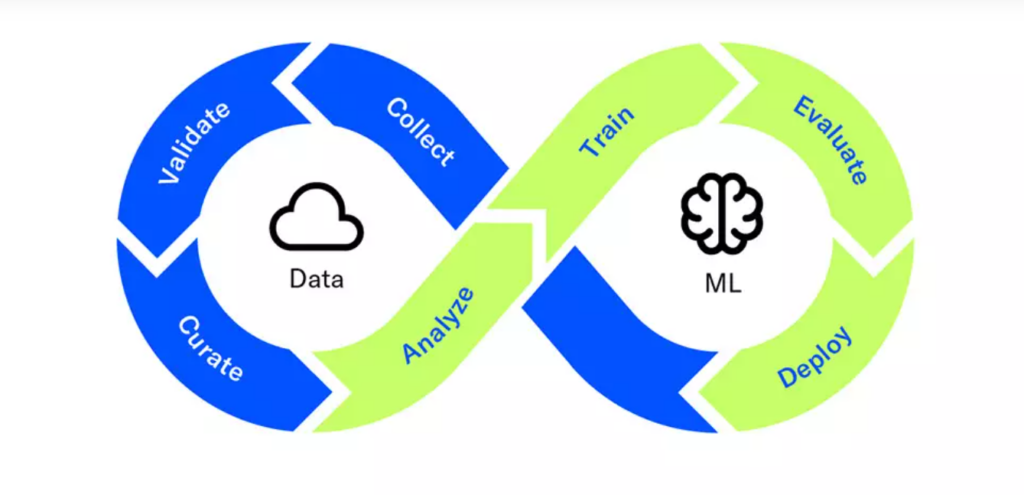
In recent years, Machine Learning Operations (MLOps) has become a hot field in the tech industry. As businesses rely more on data-driven solutions, MLOps pros are in demand to deploy and manage machine learning models effectively. But what is MLOps, and how do you learn MLOps in 2024 and become an MLOps engineer? In this guide, we’ll explain how to learn MLOps in 2024 and give you a roadmap to start your journey in this exciting field. What is MLOps? MLOps, short for machine learning operations, involves deploying, managing, and monitoring machine learning models in production. It blends machine learning, software engineering, and operations to streamline ML projects.  Moreover, MLOps aims to connect data scientists with IT teams, enabling quick, reliable, and scalable deployment of ML models. This is vital for businesses wanting to harness AI and ML effectively. Here are some of the key components that work together to drive a successful machine learning project: How to Learn MLOps in 2024 For A Career? A Step-by-Step Guide 1- Learn Python programming Python’s simplicity makes it a top choice for data analytics and machine learning. Libraries like Pandas and Scikit-learn help with complex tasks, making it easier to manage machine learning operations (MLOps). Learning Python is crucial for MLOps. It helps automate workflows and build strong ML models. As an MLOps engineer, you’ll use Python to work with APIs and databases, create efficient algorithms, and build scalable ML solutions. Python is also essential for model-serving frameworks like TensorFlow Serving and Flask, which deploy models in real-world settings. To start learning Python, check out our Machine Learning Fundamentals with Python skill track. Read More: Top 10 Python Libraries For Data Scientists 2- Data Management Data management is a crucial aspect of MLOps. It ensures that data is reliable and available for informed decision-making and model reliability. As an MLOps engineer, you’ll need to organize and store data effectively, often in a cloud environment. This includes working with databases like SQL and NoSQL. Handling large datasets requires knowledge of tools like Apache Spark for distributed data processing. Understanding data warehousing and ETL processes is also essential for managing data at scale. 3- Get an understanding of core machine learning concepts To succeed in MLOps, you’ll need a solid grasp of core machine learning concepts like supervised, unsupervised, and reinforcement learning. Understanding feature engineering and selection is crucial for feeding the right data into your models, optimizing performance for your specific use case. You’ll also need to master concepts like bias, variance, and the bias-variance tradeoff to optimize models effectively. A deep understanding of these concepts ensures that models are accurate and generalize well to new data, avoiding issues like overfitting or underfitting. In addition, you should also get familiar with model evaluation metrics such as: 4- Learn CI/CD pipelines and Version Control Version control systems are essential for managing multiple machine learning model pipelines and enabling team collaboration.  Moreover, tools like Git help maintain consistency and integrity in code and model iterations. Integration of Continuous Integration (CI) with version control automates model training and testing processes, ensuring robust model development before deployment. This setup promotes early issue detection and smooth operations. 5- Familiarize yourself with Orchestration 5- Orchestration Another key skill to learn in MLOps is orchestration. Orchestration in MLOps refers to the systematic coordination and management of machine learning workflows. This involves: To carry out such tasks, orchestration tools like Kubernetes or Apache Airflow are typically used. 6- Learn model deployment and monitoring  In MLOps, deploying and monitoring models are essential steps in the project lifecycle. Model deployment involves making the model available in a production environment, enabling it to make real-time predictions on new data. This often includes creating APIs or microservices that other applications can access within an organization. Moreover, monitoring models is crucial for identifying issues like data drift or performance degradation, allowing for proactive debugging with timely alerts. Containerization is a key practice for deploying models in MLOps, simplifying both development and operations. Here are some best practices for effective containerization: 7- DevOps DevOps is a set of practices that combine software development and IT operations, aiming to shorten the system development life cycle and provide continuous delivery with high software quality. To implement MLOps, you need to integrate DevOps with machine learning workflows. This involves using development best practices such as version control systems and agile methodologies. A solid understanding of Linux commands is crucial for managing the cloud-based infrastructure where most MLOps projects are deployed. Here are some practices to consider: What are the 8 key MLOps tools to master in 2024? To excel in MLOps, you need proficiency in various tools and platforms designed to streamline the machine learning lifecycle: Each of these tools plays a critical role in different aspects of the MLOps lifecycle, from data management to model deployment and monitoring. Our Conclusion: How To Learn MLOps in 2024? To wrap things up, let’s have a look at what we’ve covered to learn MLOps in 2024: For better and guided learning to start a career in ML, we recommend joining our AI bootcamp. But if you want to kickstart your learning from scratch starting for data science, our DS bootcamp is the perfect way to start.

How To Learn MLOps in 2024? A Step-by-Step Career Guide Read More »

What are LLMs? Atomcamp

What are Large Language Models? A 2024 LLMs Guide

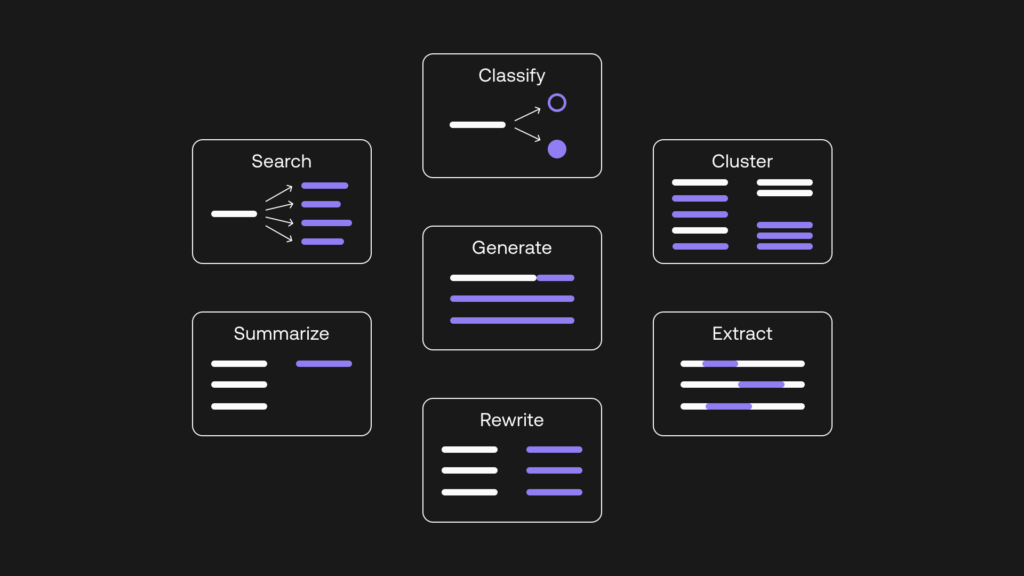
TL;DR If you’re reading this, you’ve probably heard of large language models (LLMs) like ChatGPT, Google Bard, and DALL-E. These tools are a big part of the AI revolution, but how do they actually work? In simple terms, LLMs use advanced technology to understand questions and generate accurate answers. This article is here to help you understand LLMs better. We’ll cover what they are, how they work, the different types, and their pros and cons. Let’s explore the details! What is a Large Language Model (LLM)? A Large Language Model (LLM) is a type of AI system that processes human language. They’re called “large” because they’re made up of hundreds of millions or even billions of parameters that define how the model behaves. These parameters are pre-trained using a huge amount of text data. The technology behind LLMs is called a transformer neural network, or just a transformer. Transformers are a type of neural architecture in deep learning that was introduced by Google researchers in 2017. Besides that, they’re able to handle natural language tasks with incredible accuracy and speed, which has been a game-changer for LLMs. In fact, the current AI revolution wouldn’t be possible without transformers. After the development of transformers, the first modern Large Language Models (LLMs) emerged. Among these, BERT was the pioneer, created by Google to showcase the potential of transformers.  Additionally, OpenAI developed GPT-1 and GPT-2, which were the initial models in the GPT series. However, it wasn’t until the 2020s that LLMs gained mainstream attention. They started to grow significantly in size (in terms of parameters), becoming more powerful. Notable examples from this era include GPT-4 and LLaMa. What are Large Language Models (LLMs) used for? Modern Large Language Models (LLMs), powered by transformers, have achieved state-of-the-art performance in various Natural Language Processing (NLP) tasks. Here are some examples: How do the Large Language Models (LLMs) work? Modern Large Language Models (LLMs) rely on the transformer architecture, which revolutionized natural language processing. Before transformers, using neural networks like recurrent or convolutional neural networks for language tasks had limitations. One major challenge was predicting missing words in a sentence. Traditional neural networks used an encoder-decoder architecture, which was powerful but not efficient for parallel computing, limiting scalability. Transformers changed this by introducing a new way to handle sequential data, especially text. Moreover, they’ve been successful not just with text but also with other data types like images and audio. What are the components of LLMs? Transformers are built on the same basic architecture as recurrent and convolutional neural networks, aiming to understand relationships between words in text. This is achieved through embeddings, which are representations of words, sentences, or paragraphs in a high-dimensional space, where each dimension represents a feature or attribute of the language. Embeddings are created in the encoder. Despite the large size of LLMs, the embedding process is highly parallelizable, making it more efficient. This is thanks to the attention mechanism. Unlike earlier networks, which predict words based only on previous words, transformers can predict words bidirectionally, considering both preceding and following words.  Additionally, the attention mechanism, present in both the encoder and decoder, helps capture these contextual relationships. What are the types and examples of Large Language Models (LLMs)? LLMs are highly adaptable and flexible models, leading to different types of LLMs: As the number of proprietary and open-source LLMs grows, it’s important to note that applications like ChatGPT are built on top of LLMs. ChatGPT, for example, is powered by GPT-3.5, while ChatGPT-Plus uses GPT-4, currently the most powerful LLM. Popular LLMs include: How are LLMs Trained? Training transformers involves two steps: pretraining and fine-tuning. Pre-training  Pre-training is the initial phase where transformers are trained on large amounts of raw text data, primarily sourced from the internet. This training uses unsupervised learning, which doesn’t require human-labeled data. The goal of pre-training is to learn the statistical patterns of language. To improve accuracy, modern transformers are made larger (with more parameters) and trained on bigger datasets. For example, PaLM 2 has 340 billion parameters, and GPT-4 is estimated to have around 1.8 trillion parameters. However, this trend poses accessibility challenges. The size of the model and the training data make pre-training time-consuming and costly, affordable only to a few companies. Fine-tuning  Fine-tuning is the next phase, where pre-trained transformers are further trained on specific tasks to improve their performance.  Interestingly, this step separates the initial training phase from the task-specific tuning phase, allowing developers to adapt models to different tasks efficiently. Human feedback is often used in this phase, known as Reinforcement Learning from Human Feedback. This two-step training process enables LLMs to be adapted to a wide range of tasks, making them a foundation for various applications. Multimodality of LLMs Initially, Large Language Models (LLMs) were designed as text-to-text models, meaning they processed text input and generated text output. However, developers have recently created multimodal LLMs, which can process and generate output from a variety of data types, including images, audio, and video. These multimodal models have led to the development of sophisticated, task-specific models like OpenAI’s DALL-E for image generation and Meta’s AudioCraft for music and audio generation. Moreover, the ability to combine different types of data has opened up new possibilities for AI applications, enabling more creative and versatile outputs. What are the advantages of LLMs? LLMs offer several advantages for organizations, making them valuable tools in various industries: What are the disadvantages of LLMs? While Large Language Models (LLMs) offer significant benefits, they also present challenges and limitations that need to be addressed: Concluding remarks In conclusion, Large Language Models (LLMs) are at the forefront of the current generative AI boom, offering immense potential across various sectors and industries, including data science. Their adoption is expected to have far-reaching effects in the future. While the possibilities with LLMs seem endless, there are also significant risks and challenges to consider. Their transformative capabilities have sparked discussions about how AI will impact the job market and other

What are Large Language Models? A 2024 LLMs Guide Read More »

Scroll to Top