
atomcamp

Author name: atomcamp

AI Trends in 2024: What is Coming Up?

Over the past year, there have been significant strides in generative AI, with the emergence of well-known technologies like ChatGPT, Midjourney and Bard. Notably, major corporations invested substantially in AI startups, such as Microsoft’s $10 billion contribution to OpenAI and Amazon’s $4 billion to Anthropic. Simultaneously, debates on the likelihood of achieving Artificial General Intelligence (AGI) dominated headlines. Alongside these developments, policymakers began to address AI regulation more seriously. The European Union presented an extensive set of policies governing the technology, and the Biden Administration issued a comprehensive Executive Order outlining 150 requirements for federal agencies.  Despite these advancements, scholars argue that we have not yet reached the pinnacle of AI. We can anticipate exciting new capabilities and AI trends in 2024. This includes the emergence of larger and multimodal models. Increased discussions around how to responsibly use and regulate emerging tech, and AI in particular seem to be on the cards for 2024.  Companies Embracing AI and Navigating Regulations Erik Brynjolfsson, Director, Stanford Digital Economy Lab, and Ralph Landau, Senior Fellow, Stanford Institute for Economic Policy Research commented on the anticipated widespread adoption of white-collar work shifts by companies. This would ideally usher in long-awaited productivity benefits. This upcoming AI trend is poised to impact knowledge workers, a segment that has largely remained unaffected by the technological revolution of the past three decades. Professions like creative workers, lawyers, and finance professors will witness notable changes in their roles this year. Embracing this shift should enhance job experiences, enabling professionals to explore new possibilities that were previously inaccessible. Academics foresee a shift that, while not entirely automating jobs, will predominantly augment and extend the capabilities of knowledge workers. In the realm of AI regulation, the focus extends beyond the EU’s AI Act, with California and Colorado in the U.S. adopting regulations addressing automated decision-making and consumer privacy by mid-2024. These regulations grant consumers the right to opt out of AI systems. This includes activities such as hiring or insurance. This development prompts companies to confront practical implications when customers exercise these rights en masse, raising questions about the effectiveness and fairness of human review compared to AI processes. Corporations will need to begin to figure out how to navigate tricky, and perhaps even harsh regulations, added Jennifer King, Jerry Yang and Professor Akiko Yamazaki from Stanford HAI. Technologies Related to AI and Advances Within the AI Landscape The Upcoming Global GPU Shortage: Impact on AI Development Concerns are rising about a global shortage of GPU processors, crucial components for many AI applications. Major companies, driven by the desire to internalize AI capabilities, are contributing to a surge in demand for GPUs.  With NVIDIA being a primary producer, there’s a potential strain on their capacity. The competition for these processors extends beyond corporate interests, impacting entire nations aiming to stay competitive in AI advancements.  Addressing this issue entails not only scaling up GPU production but also prompting innovators to devise cost-effective and user-friendly hardware solutions. Many are actively exploring low-power alternatives to existing GPUs. Pioneering efforts are being led by projects like the Hoffman-Yee initiative, pushing towards such advancements. While mass availability and market introduction are still distant goals, the mounting pressure to accelerate these endeavours highlights the imperative to democratize access to AI technologies. Dynamic Capabilities of AI in 2024 Scholars suggest that there will be a significant advancement in the capabilities of agents, allowing them to not only engage in conversations but also execute tasks for users. Companies in 2023 introduced chat-based interactions with AI. However,  the upcoming year will witness agents performing actions like making reservations, planning trips, and connecting with various services on behalf of users. An Evolution of AI in Multimedia in 2024 Furthermore, strides towards multimedia are anticipated, although this evolution may extend beyond a single year. The predominant focus has been on language and image models. However, the growing processing power is paving the way for video capabilities. Unlike intentional data from text and images, videos capture events as they unfold without premeditation. This transition poses an intriguing development. As AI models will gain a richer understanding of diverse content, encompassing both scripted narratives and unfiltered, spontaneous moments captured by 24/7 cameras. The Rise of AI-generated Videos Substantial multimodal models, particularly in video generation, seem to be one of the upcoming AI trends in 2024. It is leading to increased concerns about deepfakes. Vigilance is crucial as manipulated videos portraying individuals saying things they never uttered become more prevalent. Consumer awareness and voter caution are essential in this evolving landscape. Legislative action is on the horizon, with the EU finalizing widespread AI rules. It will also potentially impact major American tech companies and their models. This regulatory development is expected to unfold in 2024. In contrast, the U.S. is unlikely to witness significant AI regulation, as Congress is not expected to pass substantial legislation during an election year. The coming year will witness the release of larger models and new capabilities by startups and companies like OpenAI. Controversies surrounding the definition of Artificial General Intelligence (AGI) will persist. While fears of AI taking over the world are dismissed as hype, real concerns revolve around current issues such as disinformation and the proliferation of deepfakes, which are likely to escalate in 2024. The Future of AI: Projections for 2024 and Beyond The year presents a unique juncture in AI trends in 2024. It will be marked by the pervasive integration of generative AI technologies into various facets of our lives. A crucial aspect to consider is our collective reflection on the impact of these advancements on work, recreation, and communication. This year prompts introspection on what we desire from artificial intelligence in our communities, education, and society at large. A notable development is the increasing entrenchment of generative AI in our daily activities. It will also prompt a fundamental question: How does the expanding presence of AI technology make us feel about ourselves? This introspection necessitates a thoughtful exploration of the permissible boundaries and

AI Trends in 2024: What is Coming Up? Read More »
Why choose a Career in Data Science?

Key Insights: A Career in Data Science? Have you heard ‘Data Science’ a lot in 2023? It’s everywhere. Many say it’s the Top career this year.  Data science is more than a buzzword; it’s a viable and thrilling career path, offering more than just high pay. Pursuing a career in data science is not chasing a trend. It’s investing in a future filled with opportunities and rewards. This field blends challenge with lucrative prospects, making a career in data science an appealing choice for professionals. According to the U.S. Bureau of Labor Statistics, there’s an impressive forecast for data science jobs. They’re expected to increase by 35 percent from 2022 to 2032. This growth translates to about 17,700 new job openings annually over the decade. Such expansion marks data science as not just a fast-growing field. Furthermore, It also signifies a realm brimming with opportunities for aspiring professionals. Considering a Career in Data Science? This guide is your comprehensive roadmap. It delves into the dynamic and rapidly growing field of data science, a sector brimming with opportunities and advancements. The Rising Importance of Data Science Careers Data science is becoming more important because it helps us understand large amounts of data. This understanding is key for making better decisions in business and other areas. Therefore, here’s why data science is so important: Discovering Diverse Careers in Data Science Data science offers a wide range of career opportunities, reflecting its interdisciplinary nature and high demand across various industries. Some of the key career paths in data science include: These roles demand technical and soft skills, including programming languages, statistical analysis, and data visualization. Strong communication and problem-solving abilities are also essential. Skill Development: Enhancing Analytical and Critical Thinking These roles demand technical and soft skills, including programming languages, statistical analysis, and data visualization. Essential Soft skills include, strong communication and problem-solving abilities. These skills are essential for enhancing analytical and critical thinking. Some of the key skills required for a career in data science include: High Demand: The Growing Need for Data Experts Data science is in high demand due to the growing need for data experts across various industries. Some reasons for this high demand include: Lucrative Salaries: Financial Rewards of a Data Science Career Data science offers lucrative salaries due to the high demand for data experts across various industries. Some key points about the financial rewards of a data science career include: Problem Solving: Impacting Real-World Challenges Data science has a significant impact on addressing real-world challenges across various domains, including healthcare, climate change, urban planning, and national security. Some examples of how data science is making a difference in real-world situations include: Versatility: Applying Skills Across Sectors Data science is broadly applicable, with nearly every type of organization benefiting from having data science experts who can report on and monitor data to make better decisions, improve performance, and meet goals faster. This versatility makes data science an in-demand skill that opens new doors across sectors, empowering professionals to make an impact in various industries, for instance; Future-Proof Career: Staying Relevant in a Tech-Driven World Data science is a future-proof career due to the increasing demand for data-driven insights and decision-making across various industries. The field of data science is constantly evolving, with new technologies, tools, and techniques being developed all the time.  The demand for data science-related jobs is steadily growing, and almost every organization wishes to have a machine learning wing where data scientists would be much sought after. The field has seen massive growth in the last few years, and this growth is expected to continue in the upcoming years. Therefore, data science is a future-proof career that offers excellent job prospects and competitive salaries across various sectors such as finance, retail, healthcare, and technology. Networking and Community: Collaborating with Like-Minded Professionals Data science offers numerous opportunities for networking and community, allowing professionals to collaborate with like-minded individuals and stay updated with the latest trends and techniques. Some of the key benefits of networking and community in data science include: Conclusion In conclusion, data science stands at the heart of numerous industries, driving innovation and enhancing customer experiences. Moreover, it is shaping the future of healthcare, demonstrating its immense potential to improve our lives and address global challenges. As a data scientist, you have the opportunity to be at the forefront of this transformational wave, actively using your expertise to facilitate positive change. Furthermore, this field not only offers lucrative financial rewards but also enables the development of critical analytical skills. Given the high demand and shortage of skilled professionals in data science, there exists a unique opportunity for those interested in this career, promising significant growth and impact across various industries. Simple tips to start a career in Data Science If you’re thinking about starting a career in data science, here are some simple steps to follow:

Why choose a Career in Data Science? Read More »

AR

Augmented Reality Solutions for Heritage Conservation in Pakistan

Augmented Reality for Heritage Conservation What is Augmented Reality? Augmented Reality (AR) is a technology which allows for engaging and immersive experiences by projecting computer-generated graphics onto real-world surroundings. Some of the most popular and classic examples of AR are Pokemon Go, Google Lens, Sephora AR, Instagram and Snapchat filters. As per Statista, there are some 1.7 billion mobile AR users worldwide. Other statistics suggest that with the market size standing at approximately 9.53 billion USD in 2021, it is expected to bounce to 13 billion USD by the end of 2023 and almost double by 2025, capping at 26 billion USD. What does it take to build an Augmented Reality app, and how much does it cost? The skillset required by AR developers includes computer vision skills and an excellent grasp of 3D modelling, including construction, texturing shading, and rendering. They will also need knowledge of various programming languages. Factors which affect app development costs include features, hours, cost of human resources, complexity, tools, third-party integrations and database services. Research suggests that developing a basic AR application takes $7000-$10,000 in the USA, with the primary cost being that of human resources. In Pakistan, an AR solution can be developed at one-sixth of the cost, so approximately $4200-$6000 for a basic AR application. Using Augmented Reality for heritage conservation The nature of the technology allows it to be a perfect fit for museums, allowing remarkable exhibits, bringing artworks to life, increasing audio or visual ambience, reconstructing artefacts or even entire buildings, increasing educational experiences for tourists, or even for virtual museum tours. Within heritage conservation, there are three things, in particular, which AR applications can be used for: translation and interpretation of signage, design modelling and architecture, and education, for on-site tours as well as improving off-site accessibility. How can Pakistan use Augmented Reality? Pakistan can not only develop low-cost AR solutions for its museums but also outsource development for other developing countries that have dedicated their focus towards harnessing the economic potential of tourism, thereby making use of the heritage-tech sector for diplomacy, as well as trade. Potential country partners can include Uzbekistan, Azerbaijan, Turkey, Morocco, and Egypt. Potential collaborators can also include universities, museums, art and culture institutes, and INGOs to open up space for new avenues in archaeological conservation. Pakistan can look towards developing its very own Pixel+, an initiative led by The Royal Museums of Art and History, Brussels, and by KU Leuven. It has enabled 3D depth images to be reconstructed to study and preserve heritage materials. The Bridge Trails App can be adapted for tours in Androon Lahore and Heritage Trail Peshawar. Simple Marker AR applications can also be developed to enhance visitor experiences at Taxilla, for stupas on the outskirts of Peshawar and at various forts taking inspiration from the app in use at Fort William Henry to take visitors back in time. This is not to say that the adoption of emerging technology will be without its challenges. However, with the opportunities outweighing the costs, all in all, Pakistan can and must explore emerging technology including AR to conserve heritage.

Augmented Reality Solutions for Heritage Conservation in Pakistan Read More »

Best Marketing Tools in 2024

Best Marketing Tools in 2024 What is marketing for businesses? The primary objective of any business is to generate leads and successfully sell their product. To achieve this, the foremost step is to establish visibility in the market, commonly referred to as Brand Awareness in marketing.  Once this initial phase is accomplished, the next crucial step is to strengthen your Brand’s Authority. Building trust among your audience brings authority. If people can quote your brand or are ready to buy from you, it shows that they do trust you. Various practices like attractively showcasing your product, and sharing Client Testimonials make you credible. Other ways may include providing additional value content to engage users. Thanks to AI, a company may now handle all aspects of marketing and advertising in-house, or have a single freelancer handle the entire task. Previously, the majority of businesses would employ marketing agencies to handle these tasks.  Why do you need best marketing tools in 2024 to make your life easier? Marketing involves a wide range of activities, including copywriting, graphic design, video editing, and content idea generation. When performed the traditional way, they all appear to be very difficult exercises.  But let me tell you, with the help of AI tools, one person can accomplish it all. Robots can’t replace humans, in my opinion, but those who know how to use them to their advantage may certainly replace those who don’t! Who should use these marketing tools? These tools are recommended for professionals including content planners, graphic designers, social media managers, and digital marketers. You can cut down on job time and improve the quality of your work by combining a variety of AI tools.  Best Marketing tools: Our Top Picks As a marketer in a start-up, I am responsible for various tasks such as content creation, copywriting, graphic design and video editing. I myself have transitioned to these tools which helped me to improve my productivity. Let me drive you through the beginner friendly tools that I have been using for my daily tasks that include. Here are the best marketing tools in 2024. Content Idea Creation Copy Writing Graphic Design Video Editing Metrics and Analytics ChatGPT ChatGPT, or conversational AI, can be a valuable tool for marketers in content creation and ideation. Here are the pros and cons of using ChatGPT for copywriting and content idea generation: Pros:Content Inspiration: ChatGPT can generate a plethora of ideas by providing diverse perspectives, angles, and content suggestions based on the input provided by marketers. It can assist in brainstorming sessions, leading to innovative content ideas.Efficiency: It accelerates the content creation process by quickly generating drafts, outlines, or initial content pieces, saving time for marketers who can then refine and polish the generated content.Variety of Formats: ChatGPT can assist in creating content for various formats such as blog posts, social media captions, newsletters, and more, thereby diversifying a marketer’s content strategy.Language Polishing: It helps refine language, grammar, and structure in content drafts, ensuring they are coherent and well-articulated, which is crucial for effective communication.Continuous Learning: The AI learns from interactions, meaning it can improve over time and provide more relevant and accurate content suggestions based on past interactions and feedback. Cons:Quality Assurance: While ChatGPT can generate content, it might lack the creativity and human touch needed for truly original, high-quality content. Human editing and oversight are often necessary to ensure content quality.Limitations in Understanding Context: Sometimes, the AI may misinterpret context or provide irrelevant suggestions, requiring marketers to carefully guide or interpret the AI’s responses.Dependence on Input Quality: The quality of the input provided to ChatGPT significantly impacts the quality of the generated content. Vague or incomplete input can result in less relevant or useful content suggestions.Potential for Plagiarism: As the AI generates content based on vast amounts of data, there’s a risk of unintentionally replicating existing content. Marketers need to ensure that generated content is original and not plagiarized.Inability for Original Thought: ChatGPT is based on existing data and patterns, lacking true creativity or original thought. It can generate ideas based on existing information but might struggle with truly groundbreaking or unconventional concepts. Marketers can leverage ChatGPT as a valuable assistant in their content creation process. However, it is important to supplement it with human judgment, creativity, and editing. This ensures that the final output aligns with the brand’s voice, quality standards, and goals. Capcut CapCut is a video editing application that gained popularity for its ease of use and range of features. Here are some of its pros and cons: Pros:User-Friendly Interface: CapCut offers a straightforward and intuitive interface, making it accessible for beginners and casual users.Feature-rich: Despite being a free app, CapCut provides various video editing features such as trimming, splitting, merging, adding effects, filters, transitions, and more.Multi-layer Editing: Users can work with multiple layers of video, text, stickers, and effects, allowing for more complex and creative editing.Music and Sound Effects: CapCut offers a vast library of music and sound effects that users can easily add to their videos.Free to Use: CapCut is available for free, providing access to most of its features without any subscription costs. Cons:Watermark: Like many free video editing apps, CapCut adds a watermark to videos, which can only be removed by upgrading to a premium version or subscribing.Limited Platforms: CapCut is primarily available for mobile devices (iOS and Android), which might limit its usage for users preferring desktop-based editing.Export Limitations: Free versions might have limitations on video export quality or format options, requiring an upgrade for higher resolution exports.Advanced Features: While CapCut offers a lot of features, it might lack some of the more advanced editing options found in professional desktop editing software.Performance: On older or less powerful devices, CapCut might experience lags or performance issues when handling larger or more complex video projects. CapCut can be a great option for those looking for a free and user-friendly video editing app, especially for basic to intermediate editing needs on mobile devices. However, for more professional or advanced video

Best Marketing Tools in 2024 Read More »

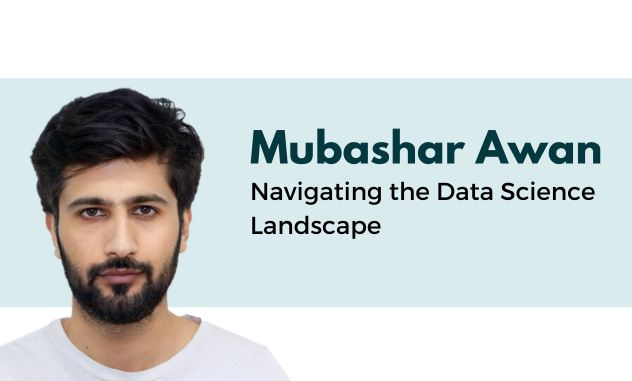
Mubashar Awan: Navigating the Data Science Landscape

15th June, 2023 Mubashar Awan: Navigating the Data Science Landscape Mubashar is working as a lead AI/ML Engineer at Afiniti, Pakistan. He has 5 years of experience in this field, working previously for FBR and Graana in Pakistan. He has always been passionate about AI, keen to learn about new advancements in it. Mubashar is not just interested in building models, but the engineering level work also excites him; to make models productionalize, so that the end user can benefit. What got you interested in Data Science? I got interested in this field because I was fascinated by its ability to predict based on historical data. The idea of taking insights from data and making informed decisions intrigued me from the start. My first experience with this field was interaction with chatbots that could mimic human behavior. Although I was initially unaware of the science behind it, I got curious and eager to explore it further. As I started studying this field, I realized the capabilities this field offers. It has a vast range of techniques and methodologies that can be applied to various industries and domains.  Another aspect that stands out for me is the dynamic nature of data science. Each project has a unique challenge, requiring a person to think creatively and find innovative solutions. There is no room for repetitive work, each project offers the opportunity to explore new data and work on new models. Moreover, it’s a multidisciplinary field that includes mathematics, statistics, programming and enables you to have a diverse skill set. Ultimately, my interest in data science is to contribute to this growing field and make data-driven decisions. What distinguishes your work from that of your contemporaries? In my opinion, what distinguishes my work from that of my contemporaries is that it allows me to think creatively. It pushes you to think big and try new ideas. It doesn’t have the repetitive nature of work, with each new project you’re working on new problems and exploring new domains. Because of the ability to work with real data, It allows you to learn about different domains. What has been the most surprising insight you have found in your career as a data scientist? From my experience, one thing which could be beneficial for the newcomers in this field is that whenever a new person tries to learn about this field, he/she tries to jump into deep learning or transformers these days. But from my experience, I have seen that simpler solutions work most of the time. It is always a good practice to try base models, if they can solve the problem as they are easier to explain to the stakeholders too. But if problems require to work on deep models, then one can definitely give it a go. What would be your advice to young and aspiring data science students who are trying to navigate in the world of data science? My advice to young students who are passionate about this field is to be persistent. It takes time to understand it, and with rapidly evolving it is also important to keep yourself updated with recent advancements. What does the future of Big Data look like? With the amount of data growing continuously, the future of big data is bright. The demand for data scientists will continue to increase. Different businesses would require data scientists to make sense of their data.  The security of data would be a big aspect which is a challenge to address. Data will become more and more complex and would require data scientists to have a deeper understanding of techniques. Picture Credits: Mubashar Awan

Mubashar Awan: Navigating the Data Science Landscape Read More »

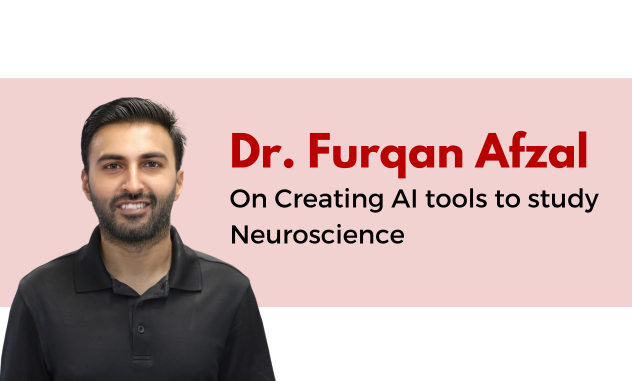
Dr. Furqan Afzal: On Creating AI tools to study Neuroscience

30th May, 2023 Dr. Furqan Afzal: On Creating AI tools to study Neuroscience Dr. Muhammad Furqan Afzal recently completed his PhD in Computational Neuroscience at the Icahn School of Medicine at Mount Sinai in the USA, where he focused on the intersection of neuroscience and AI, and developed AI tools for extracting insights from brain activity data. He holds a Master of Science degree in Computational Neuroscience from the University of Cincinnati, and obtained his Bachelor of Science degree in Electrical Engineering from LUMS SSE in 2014.    Dr. Afzal has also worked as a Research Scientist at Stanford University, where he utilized AI and signal processing techniques to identify neural biomarkers associated with symptoms in Parkinson’s disease. He has also gained experience in neurotech companies and startups, contributing to the development of AI-based tools for brain-computer interfaces (BCI). His research interests encompass various areas including neuroscience, artificial intelligence and its applications in healthcare.   How does Data Science and Neuroscience converge? And how is it beneficial for the world? We are gathering vast amounts of data from neuroscience experiments conducted on both humans and animals. These experiments are conducted with the aim of investigating different processes such as decision making, memory, and motor control. Additionally, we conduct experiments to explore brain-based or other biological markers associated with various neurological or psychiatric conditions such as Parkinson’s disease, epilepsy, or depression. This is where the importance of data science and artificial intelligence (AI) emerges. Given the overwhelming volume of data, data science and AI enable us to extract valuable insights from the raw data concerning the brain mechanisms underlying different normal processes and neurological conditions.   In the field of computational neuroscience, we also frequently construct computational models to simulate various brain functions, and data science proves to be useful in building and exploring those models. These models, in turn, can generate testable hypotheses for further experiments.   What was your PhD thesis about and what were your findings? During my doctoral studies, my research focused on developing innovative machine learning and AI techniques that proved valuable in extracting insights from neuroscience data, as mentioned earlier. Broadly speaking, my work encompassed three distinct neurological conditions: Parkinson’s disease, depression, and epilepsy. In these domains, I employed data science and AI methodologies to identify neural or brain-based biomarkers associated with various symptoms observed in these conditions, such as tremors in Parkinson’s disease or seizures in epilepsy.   Specifically, within the scope of my PhD, I created AI tools designed for time-series classification of brain data, including EEGs (electroencephalograms) and local field potentials. Utilizing these tools, I successfully detected changes in brain states among patients undergoing treatment for major depression when they had improvements in their symptoms. Consequently, these AI tools can be utilized to identify and monitor the progression or regression of symptoms in patients by analyzing their brain data.   I am actively engaged in the development of biologically inspired AI tools that aim to simulate the functioning of the brain more closely. The underlying concept is that by drawing inspiration from the intricate workings of our own brains, these tools have the potential to exhibit enhanced performance capabilities. What is the most interesting model / tool / computational structure you have worked with thus far? And what has been the most surprising insight it has generated? Our primary focus lies in identifying and addressing the actual problems that need to be solved rather than solely emphasizing on the tools themselves. Our research encompasses diverse problem domains, such as the discovery of brain-based biomarkers for diseases using time-series data or the development of innovative biologically inspired AI tools. Once we have identified the problems at hand, we can then consider the most suitable tools for solving them. The fields of computational neuroscience and AI have yielded an array of remarkable tools that assist researchers in efficiently tackling their problems and guiding them towards effective solutions. Personally, I have extensively worked with deep recurrent neural networks in neuroscience research and have found them to be highly beneficial. These networks are loosely inspired by the feedback connections observed among neurons in our brains. With their inherent memory capabilities, these networks serve as valuable testbeds for exploratory investigations, allowing us to generate insights and formulate testable predictions. Moreover, they prove to be effective tools for analyzing various types of time-series data that we collect during our research. What are the biggest areas of opportunity in the Computational Neuroscience field? In the field of computational neuroscience, there are several significant areas of opportunities that hold great potential for advancement and impact. Some of the biggest areas or subdomains include brain-machine Interfaces (BMIs) where we work on direct communication and interaction between the brains and external devices. This includes the development of neuroprosthetics and technologies that restore or enhance sensory, motor, or cognitive functions. We also have neural circuit modeling which involves creating detailed computational models that simulate real neural networks, allowing us to investigate the mechanisms underlying various brain functions and behaviors. Neural data analysis allows us to analyze and integrate large-scale neural data from diverse sources, such as electrophysiological recordings, imaging modalities, and genetic information. This involves the development of algorithms and statistical methods to extract meaningful insights from complex and high-dimensional datasets. We can use computational approaches to gain insights into the underlying mechanisms and causes of neurological and psychiatric disorders. This includes identifying biomarkers, studying disease progression, and developing computational models that can aid in diagnosis, treatment, and personalized medicine. We can develop closed-loop systems for adaptive interventions that dynamically interact with the brains in real-time, adjusting therapy based on ongoing neural activity. Thisincludes closed-loop neuromodulation techniques for therapeutic purposes and adaptive training paradigms for neurorehabilitation. These areas of opportunity highlight the immense potential for computational neuroscience to contribute to our understanding of the brain and its disorders, advance medical interventions, and drive innovation. Can you tell us about a phenomenon that is in its infant stage as of yet but has the potential

Dr. Furqan Afzal: On Creating AI tools to study Neuroscience Read More »

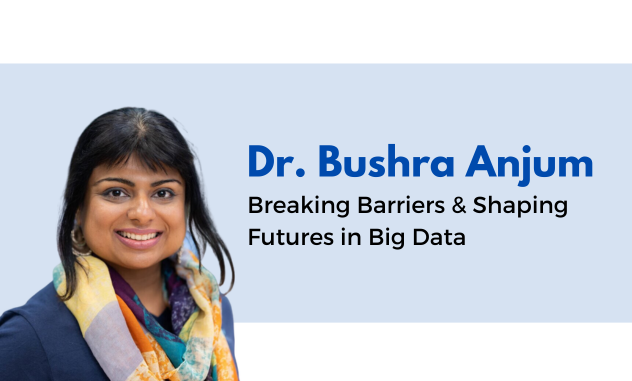
Dr. Bushra Anjum: Breaking Barriers and Shaping Futures in Big Data

17th May, 2023 Dr. Bushra Anjum: Breaking Barriers and Shaping Futures in Big Data Bushra Anjum, Ph.D., is a health IT data specialist currently serving as the Director of Data Science & Analytics for a San Francisco based health tech firm Doximity. She leads a team of analysts, scientists, and engineers to create HIPAA secure data-driven tools for over 1.8 million USA clinicians. Formerly a Fulbright scholar from Pakistan, Dr. Anjum served in academia (both in Pakistan and the USA) for many years before joining the tech industry. She continues to volunteer at Cal State University campuses, and public schools, teaching CS-related content and serving as an industry mentor. Alongside, Dr. Anjum is also serving as a community leader and mentor at GlobalTechWomen, Pakistani Women in Computing (PWiC), CRA Widening Participation (CRA-WP), Rewriting the Code (RTC), Empowering Leadership Alliance (ELA), LeanIn.org, TechGirlz, CodeGirls, among others. Dr. Anjum is a celebrated speaker at the Grace Hopper Celebration of Women in Computing Conference, Richard Tapia Celebration of Diversity in Computing Conference, STARS Celebrations, CRA-WP Grad Cohorts, to name a few. She has been recognized by Tribune as a Top 20 under 40 Professional for career excellence with a deep commitment to community service. She has been nominated as the Volunteer Woman of the Year 2021 by SLO County Commission on the Status of Women and Girls. She is also a recipient of the LUMS VC Alumni Achievement Award for sustained excellence in engineering, and leadership in the profession and public affairs. Dr. Anjum received her Ph.D. in Computer Science at North Carolina State University in 2012 for her doctoral thesis on Bandwidth Allocation under End-to-End Percentile Delay Bounds.   What got you interested in Data Science? Most of my educational and career choices have been guided by the love of exploring the unknown. After completing MSC from LUMS in 2007, I opted for a Ph.D. degree as it was an ambitious adventure. No one in my family has a Ph.D., and going halfway across the world to earn it made it even more exciting. Hence, I came to the US, studied, and completed my Ph.D. (CS) from North Carolina State University (NCSU) in 2012, with a specialization in performance evaluation and queueing theory. The next adventure was to teach, and I did so in Pakistan at FAST-NU Lahore and NCSU and Missouri S&T in the US. Then I made the switch to the tech industry. I was curious to explore the world of global technology giants; thus, I joined Amazon. I worked there for four years and learned a great deal about large-scale distributed systems with an emphasis on highly scalable fault-tolerant engineering. Next, I aimed to combine my engineering skills with my love for math, advanced probability, and statistics. Thus the field of Data Science became the perfect candidate. Fueled by my curiosity to learn more about the startup culture, I decided on my next adventure, i.e., joining (and now leading) the Data Science & Analytics team of a San Francisco based (then startup, now public) company Doximity. This is where I currently am. What excites you the most about being a Data Scientist? There are several exciting aspects of being a Data Scientist. I can write a whole essay on them, but for now, here are a few thoughts. Being a Data Scientist encourages you to develop deep technical expertise in both the theory and practice of modeling and analytics. Data science involves working with sophisticated algorithms and machine learning models, which in turn requires a deep understanding of statistical and computational techniques feeding those algorithms. As a Data Scientist, you have the ability to work across a wide range of industries and domains. Data science is applicable to almost any industry, from healthcare and finance to retail and entertainment, each with its own unique challenges and opportunities. Data science is also a highly collaborative field, so you will have the opportunity to work with experts from a variety of backgrounds, such as statisticians, engineers, developers, and business leaders, to develop and implement data-driven solutions. This collaboration leads to a diverse range of ideas and perspectives, which ultimately leads to better outcomes. What distinguishes your work from that of your contemporaries? I have a Ph.D. in Performance Evaluation and Queueing Theory and am the Director of Data Science & Analytics at the health tech firm Doximity in the USA. One of the most rewarding aspects of being in the data field is the ability to use data to make a positive impact on society. It is surprising how the healthcare system is one of the last benefactors of the digital revolution. Doximity is a digital collaboration platform exclusively for medical professionals, with over 80% of USA doctors as its members. Our mission is to save doctors time by providing them with digital workflow tools so that they have more time to do what they do best, take care of patients. My team, the data department consisting of data analysts, data engineers, and ML engineers, is building out advanced analysis pipelines and prediction models to better support digital fax, appointment and referral, telehealth, continued medical education, and other services for our medical professionals. At the beginning of 2023, our team released a beta version of a Large Language Model (LLM) powered tool DocsGPT that streamlines mundane administrative tasks for doctors and nurses, such as drafting letters to insurers, appeal denials, and post-procedure instructions for patients. Our alpha version is open to the public for feedback at DocsGPT. Our work got national coverage, including this recent piece in Forbes InnovationRx Newsletter. It will not be incorrect to say that the team, and Doximity in general, is leading the efforts of bringing the healthcare systems to the 21st century. 4. What would be your advice to young and aspiring data science students who are trying to navigate the world of data science? Data Science is an ever-evolving field. As new data sources and technologies emerge, data scientists must continue to develop their skills and

Dr. Bushra Anjum: Breaking Barriers and Shaping Futures in Big Data Read More »

On Unleashing your Curiosity to Decode your Data

11th May, 2023 Fahad Mirza: On Unleashing your Curiosity to Decode your Data Fahad Mirza, an experienced Economist, Data Analyst, & Visualizer with experience in Public Expenditure Review of the Education Sector in Pakistan (World Bank), analysis and evaluation of training program funded by FCDO (for PSDF), and perception analysis for the Khyber Pakhtunkhwa Government on the Merged Areas Governance Project through Viamo. Mirza is a strong believer in lifelong learning and disseminating knowledge. A graduate of Masters in Economics from LUMS, who likes working with Stata, ArcGIS, and Python programming software. In an insightful discussion with atomcamp, Fahad delves into his educational background and how he shifted towards Data Science, telling us what a data scientist needs to kick start their career in Data Science. First of all, please tell us about your educational background and how did you get into data analysis?Thank you for having me here. It’s a bit of a long journey. I graduated from FAST with a Bachelor’s in Business Administration in 2010. I did not move into data initially and I started directly in construction and worked at the project management side for seven years but in between I felt I should move towards the scientific side of things. Because mostly people are not keen on going into the nitty gritty of data collection and understanding the impact it can make. And that is exactly why I wanted to move into data analytics.  I got an opportunity to work on the Anti-Human Trafficking Bill, which is truly an odd shift from construction, it allowed me to get into policy making. The bill was presented in 2018. From there on, when I worked in policy, I realized there is a lot of room to grow. So I wanted to explore options like public policy or economics in Pakistan. But the question was, what’s a good place for it? Because I could not afford a degree from abroad. I tried to apply for the Fulbright Scholarship and it did not work out for me. So then I got an opportunity to do a master’s from LUMS. And that’s where my data sense started to come in. When you hear about economics in Pakistan, the first question people ask is about inflation or trade deficit. But surprisingly, it is nothing like that. After my master’s, my data abilities were polished as Econometrics and Data Analysis were a major part of my courses at LUMS.  That’s truly a long journey of getting into data science. Can you please tell us what was the first data set you remember working with? What was it about?So my first data set was the MICS and the PSLM that were introduced during the courses at LUMS. This was my first-ever exposure to real-life data sets. They trained us on how to look at data and analyze it from different aspects.  And since you have come a long way since then what have you been working on this year and how is it interesting to you?After graduating, I have been working on two major subjects. One has been The Female Labor Force Participation and Mobility at the Center of Economic Research Pakistan (CERP) with Dr. Kate Vyborny and analyzing how nudging can help women participate more in the labor force. Recently, I left CERP and moved into the education sector, and started working at the World Bank. There, I am currently working on my second project which is the Public Expenditure Review of the Education Sector in Pakistan. I cannot discuss the details of it as it will be published later on but I have been working on this project rigorously these days.  I believe, if you look at the education sector itself, many policies are coming in but they are driven by the personal experiences of policymakers and not looking into how data is being collected and how analytically we can use it to make data-driven decisions.  If you would like to share any of your experience as a data scientist and any mistakes, if you have made and how did you recover from them? Because the data scientists out there have ifs and buts in their minds to break that monolith for them that despite mishaps, they can always come back. When I was working at CERP, we would focus on working only through evidence and data. But our training throughout life is to add your perspective and not talk through evidence so most of the analysis I initially started doing had my mix of things on it. They would appreciate it but they would also question if it’s an angle that we can concretely talk about in that particular data we were working with. For example, what you are adding in the analysis is not reflected in the data and that would let me re-analyze things and present information through the lens of data.  Moving on, what do you think the future of big data looks like in Pakistan?In Pakistan, there is a huge gap when it comes to data analysis. We don’t even have access to data to begin with. Although institutions are collecting data regularly, due to lack of access we are unable to go into the depth of things. So once this access starts to open up, there is huge potential. We can have policies for poverty reduction; even education also requires big data. The more information, the better policies are informed. But again, the problem is how well the data is collected because data is as strong as its weakest link. If data is giving the wrong picture, the results won’t be accurate either. Although big data is useful, the right way of collecting data is what is missing in Pakistan.  Last question to you, what is the one piece of advice that you would like to give to data scientists who are starting out or maybe those who want to explore the data science field and make it their full-time career? How should they start? And

On Unleashing your Curiosity to Decode your Data Read More »

Scroll to Top